

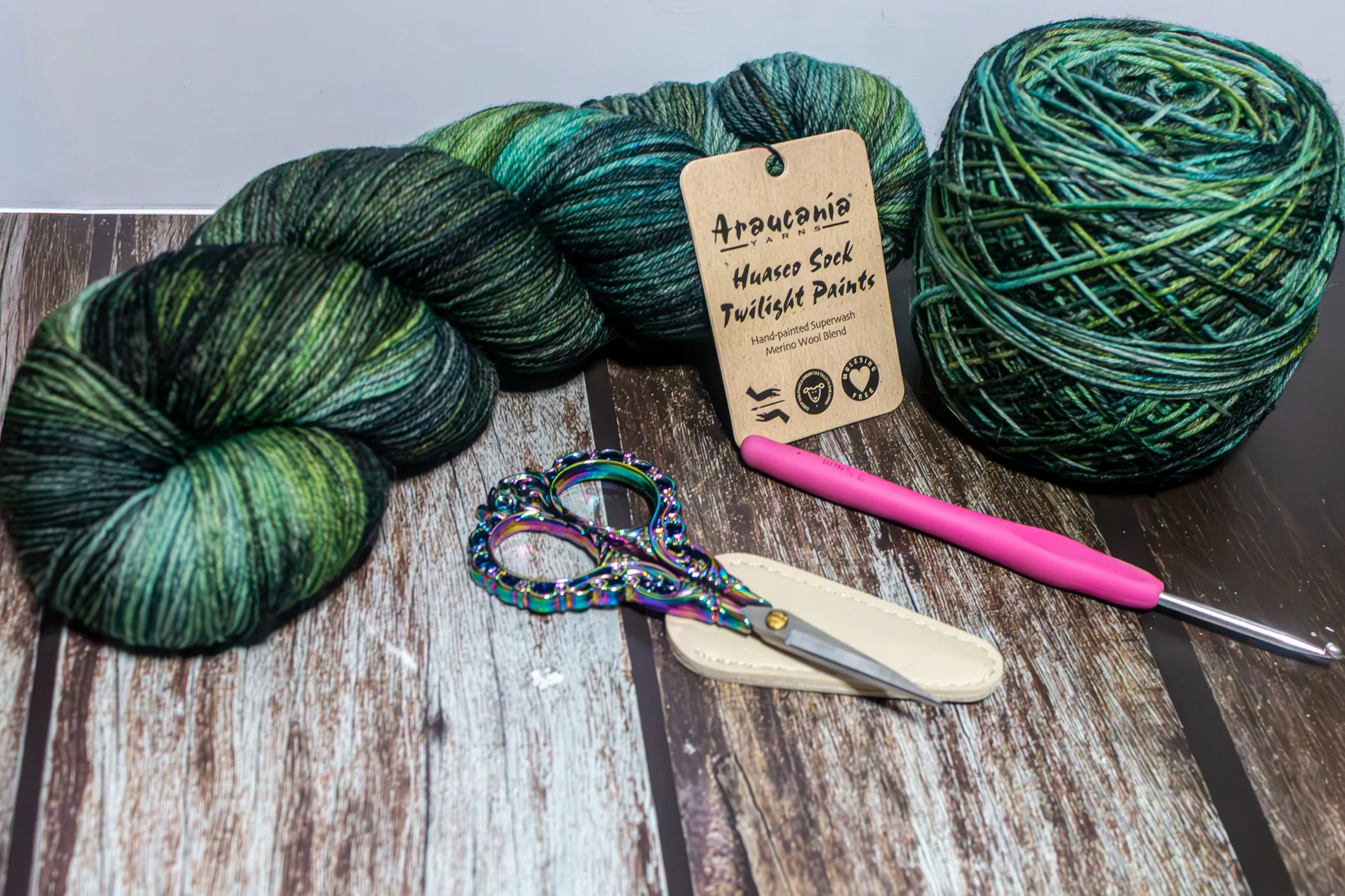
So, you want to learn to crochet…
Crochet is a timeless pastime that can produce beautiful, practical works of art. But where do you start when starting to learn? There are two ways I know of that most of us start:
The YARN.
Let’s say you found a yarn you absolutely love. The color is perfect, it feels sooooo good in your hands, and now you’re thinking, “Okay… what do I do with this?”
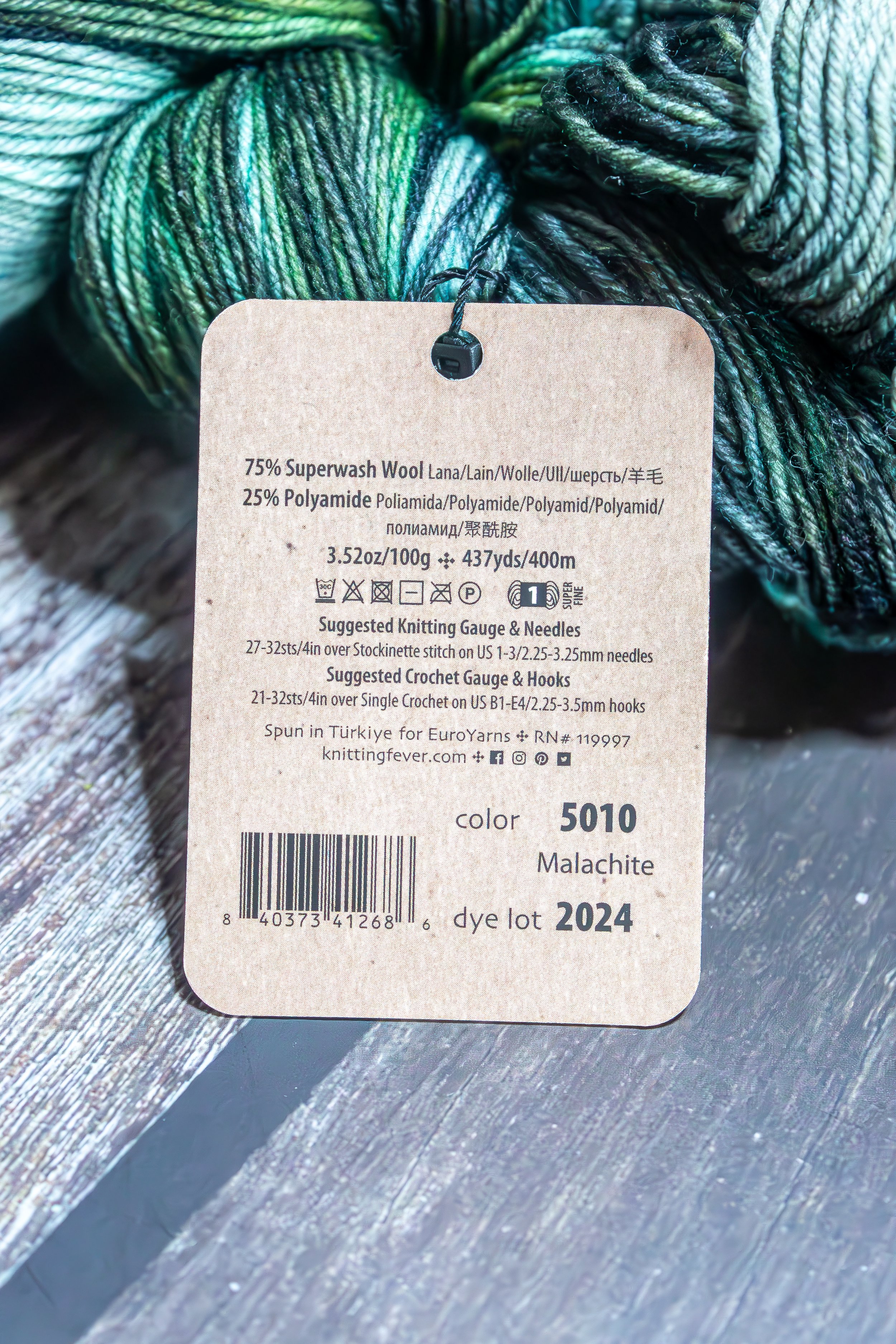
Before you toss it in your cart and hope for the best, flip it over and take a look at the label. That little band wrapped around your yarn? That’s where all the important information lives.
Start with the yarn weight. This tells you how thick or thin the yarn is, and it’s usually shown as a number—like 4 for worsted weight or 5 for bulky. The weight matters because it determines how your finished project will look and feel, and what hook size you’ll need to use. In the example to the right, it is a size 1 super fine weight.
Next, look for the recommended hook size. This is the yarn telling you, “Hey, I behave best with this.” You don’t have to follow it exactly, but if you’re a beginner, it’s a really good place to start. To the right, we see the suggested hook is a US B1-E4, or a 2.25mm-3.25mm hook.
You’ll also see the fiber content—like acrylic, cotton, wool, or a blend. This affects everything from how soft the yarn feels to how it stretches, how warm it is, and how you care for it later. For example, acrylic is great for beginners because it’s affordable and easy to care for, while cotton has less stretch and can feel a little tougher on your hands. The yarn to the right is 75% superwash wool and 255 polyamide.
Finally, check the yardage. This tells you how much yarn is actually in the skein. Patterns will tell you how many yards you need, not just how many skeins, so this number matters more than people think. One skein of the yarn to the right has 437 yards/400 m per 3.52oz/100g.
Once you know how to read this label, you’re not just picking yarn because it’s pretty—you’re choosing it with purpose. And that’s what makes the difference between a project that works… and one that ends up in a pile of “I’ll figure it out later.”
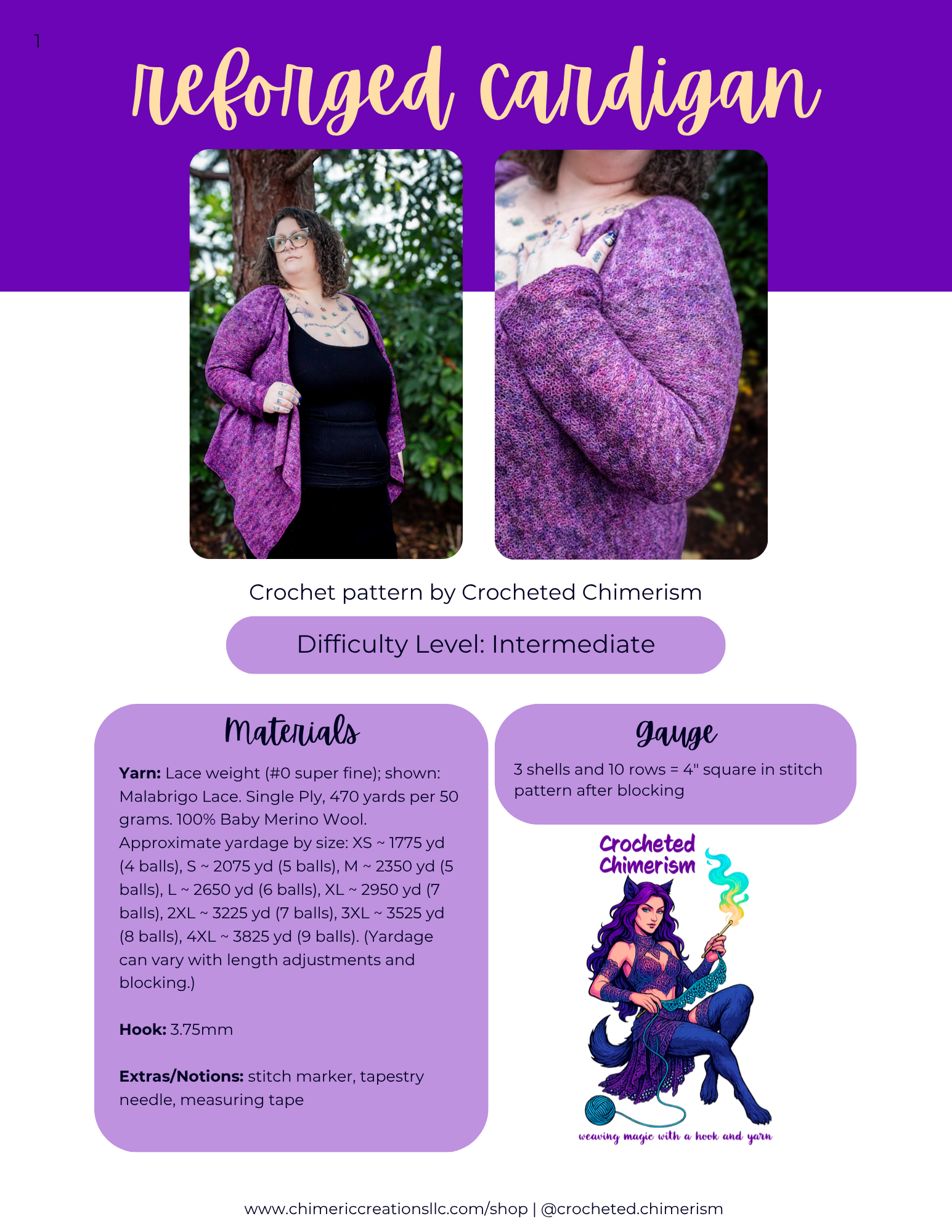
Now let’s flip it. Instead of starting with yarn you fell in love with, let’s say you found a pattern—or even a full kit—and thought, “I want to make that.”
This is where a lot of beginners get tripped up, because it’s really easy to assume you can just grab anything that looks similar and it’ll work out. Sometimes it does. A lot of times… it doesn’t.
At the top of most patterns, you’ll find a materials or requirements section. This is your roadmap. It tells you exactly what the designer used to create the piece you’re looking at.
Start with the yarn. The pattern will usually list the brand, the yarn name, the weight, and how much you’ll need—often in yards or meters. You don’t have to use the exact same yarn, but you do want to match the weight and get as close as possible on yardage if you want a similar result. This pattern calls for a size 0, or lace weight yarn. Each size has a corresponding yardage estimate; it’s best to get a little more yarn than you think you’ll need.
Next, look at the hook size. Just like with yarn labels, this is the hook the designer used to get their results. If you use a much bigger or smaller hook, your project can come out too loose, too stiff, or completely the wrong size. This pattern calls for a 3.75mm hook.
You’ll also see any additional tools—things like stitch markers, yarn needles/tapestry needles, or buttons if it’s a wearable piece. This is the part people ignore… and then halfway through they’re digging through drawers or pausing the project because they’re missing something small but important. This pattern calls for stitch markers, tapestry needles, and a measuring tape.
If you’re working from a kit, most of this is already handled for you. The yarn, hook, and extras are chosen to work together, which makes it a great option if you don’t want to make a bunch of decisions right away.
The goal here isn’t to follow rules perfectly—it’s to understand what the pattern is asking for so you can either follow it confidently or make intentional changes later.
Because once you understand the “why” behind these choices, you stop guessing… and you start creating on purpose.
At first glance, this chart might look like a lot—but once you know what each section means, it becomes one of the most helpful tools you’ll use.
Let’s break it down.
Starting on the far left, you’ll see the yarn weight numbers, from 0 to 7. This number tells you how thick the yarn is. Lower numbers mean thinner yarn, and higher numbers mean thicker yarn. So lace (0) is very fine, while jumbo (7) is thick and bulky.
Next to that are the common names. These are the terms you’ll actually see on yarn labels or in patterns—like “worsted,” “DK,” or “bulky.” Patterns will usually use these names instead of just the number, so it’s helpful to get familiar with both.
Now, the gauge sections—this is where people start to panic, but don’t. Gauge simply tells you how many stitches fit into a 4-inch square. There are two columns here: one for knitting and one for crochet. Since we’re focusing on crochet, you’ll want to look at the “crochet gauge” column.
What this means in practice is: thinner yarns have more stitches in 4 inches, and thicker yarns have fewer. This directly affects the size and drape of your finished project.
Next is the hook size. This is the recommended range of hook sizes that typically work well with that yarn weight. If you stay within this range, your stitches will behave the way they’re supposed to. If you go smaller, your fabric will be tighter (less holes) and stiffer. If you go bigger, it’ll be looser (more holes) and more flexible.
Finally, the “best for” column gives you a general idea of what each yarn weight is commonly used for. This isn’t a rule—it’s a guideline. You can make a blanket with lace yarn if you’re feeling ambitious… just don’t expect it to be done this decade.
The goal of this chart isn’t to limit you—it’s to give you a starting point. Once you understand how yarn weight, gauge, and hook size all work together, you’ll be able to make smarter choices and get results that actually match what you’re trying to create.
Where Ideas Take Shape
Where creativity meets clarity, and vision meets action.
We believe in doing things differently—with intention, with passion, and with people at the center of it all. Every detail here reflects that mindset.
It All
Begins Here
We bring creativity and expertise to everything we do.
Here, creativity meets opportunity. Whatever you're building, we're here to help you take the first step with confidence.